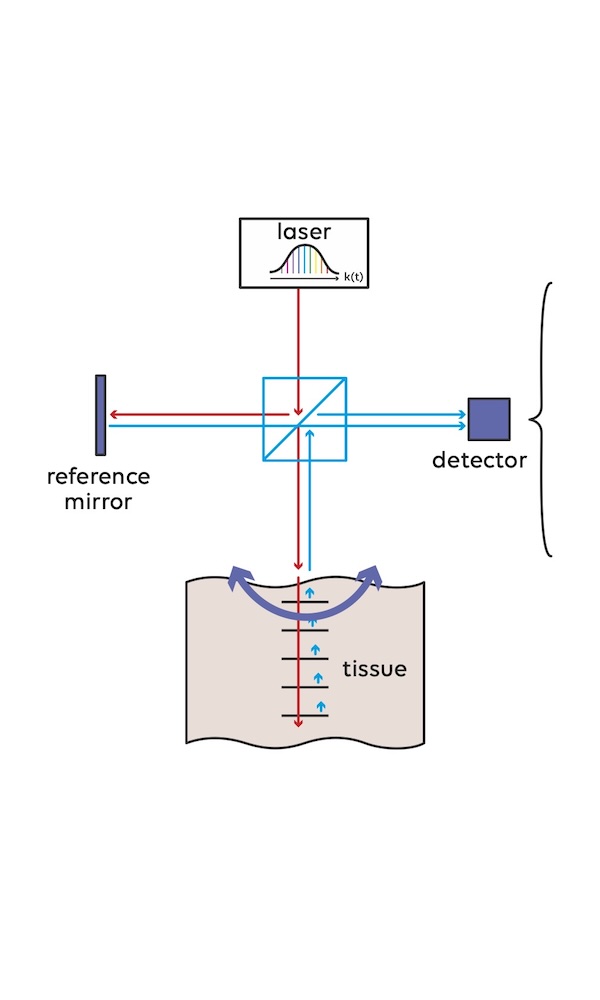
Our team has vast experience in the design of medical products and understands the importance of balancing regulatory requirements with product innovation. Our platform is based on swept-source OCT technology that can be customized to fit your needs. We can help by designing the optimal patient interface or providing our SDK-engine so you can build your own software application.
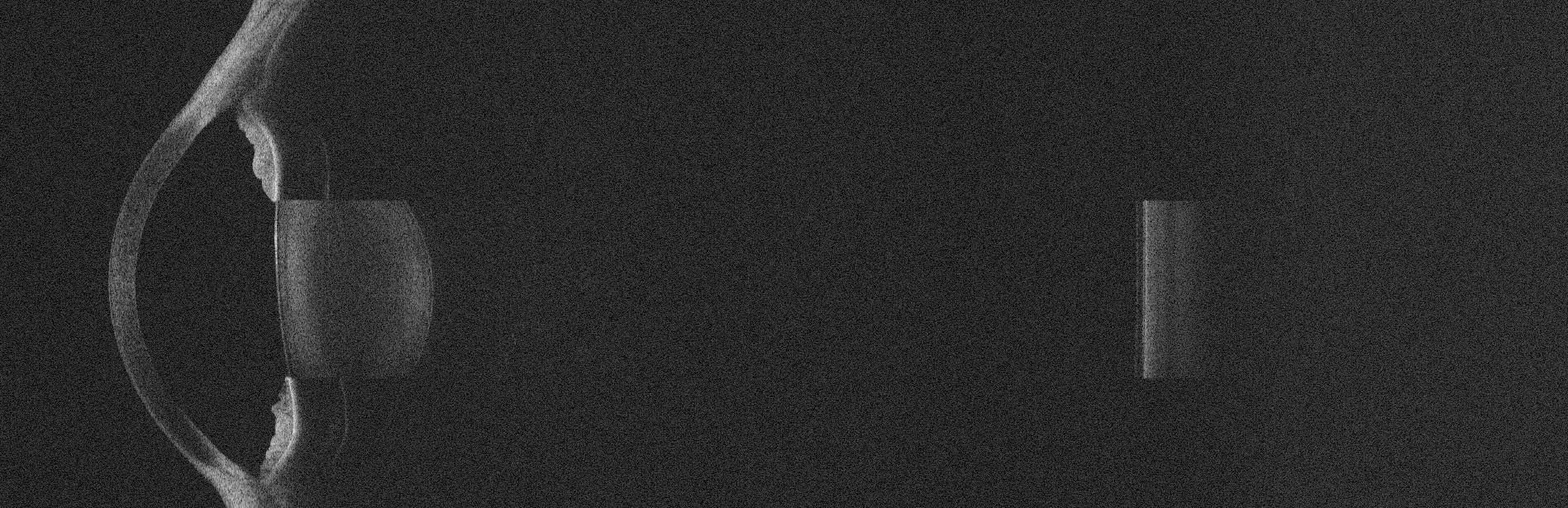
A great case example of our work: Acoustic Insight developed a state-of-the-art optical biometer for cataract surgery. Our OCT engine delivers market-leading accuracy, allowing cataract specialists to capture the eye’s full length in a single, high- resolution scan.
From a product point of view, integrating our solution into our partners’ existing hardware and production infrastructure was both exciting and challenging. We are proud to have played important role in developing this new product configuration.
Optical Coherence Tomography (OCT) is a non-invasive imaging
technique that uses infrared light to create high-resolution
images. It works much like ultrasound but instead of using
sound waves, it uses laser-light giving OCT a significant edge:
its resolution is 10 times higher compared to ultrasound or CT/
MRI. Using OCT clinicians can measure precise distances on a
micrometer-scale and even capture vibrations of the hearing
bones, in real time.
OCT first proved its value in ophthalmology. In the past two decades it transformed eye care and became essential in modern ophthalmic practices. Its success in ophthalmology later inspired adaptations in other medical fields, like cardiology (imaging coronary arteries), oncology (tumor margins), and dermatology (skin lesions).
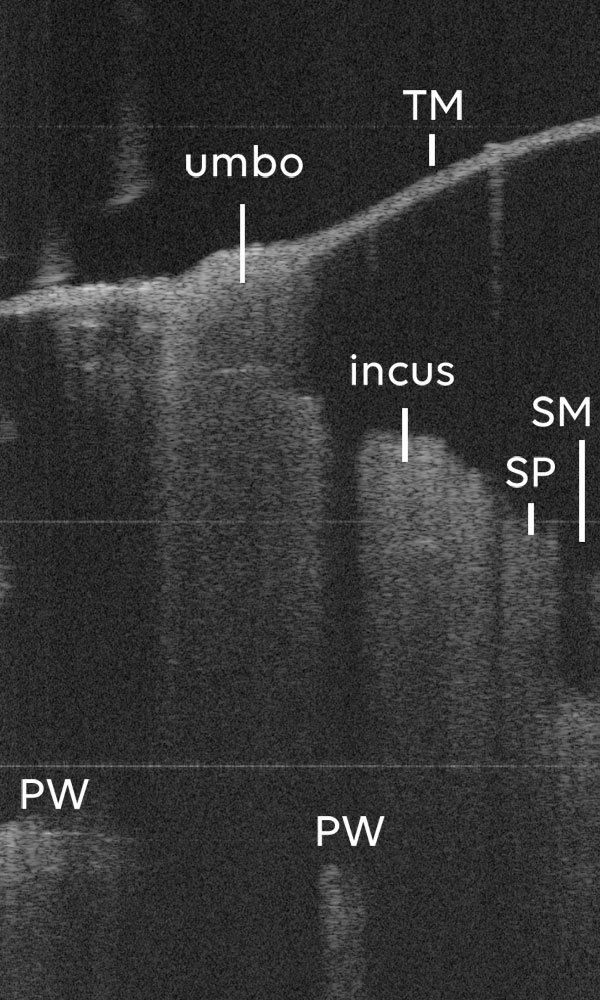
One of OCT's most exciting advantages is transmembrane imaging. Specifically, it enables imaging through the round window membrane (RWM) or tympanic membrane to see fine tissue structures and measure tiny distances inside the ear – a capability with real clinical and research potential.